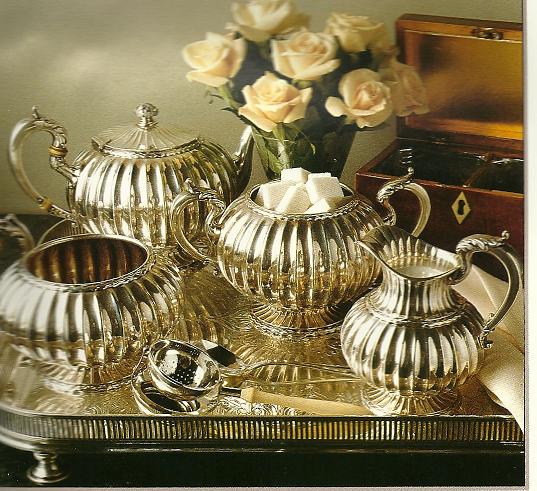
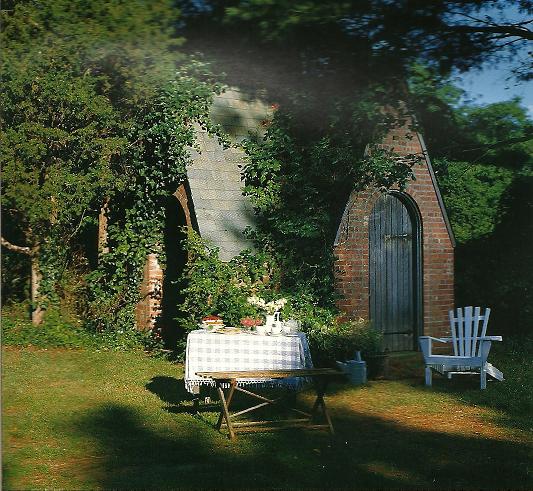
What do these seemingly dissimilar places and things have in common, and what, pray tell, is an "oops?" They all have England in common, of course, a country and design aesthetic I seem unable to leave. (My transition to New England is close just not quite yet.)
While refiling my book on Great Dixter from my last post, in the spot next to the book's empty slot, I discovered a March 2011 copy of The World of Interiors. I had placed the magazine there to remind myself to use it on the Great Dixter posting, but I completely forgot - that would be the "oops." Next, we cannot discuss the beautiful gardens of England without mentioning the garden at Hidcote Manor, so that must be included today. And lastly, we will view a house whose contents were auctioned by Sotheby's in October, 2003, a house that shouts all things English as you will see. And very lastly, I'd like you to see several beautiful arrangements made by Winston Florists in Hingham, Massachusetts. Hingham is the home of my son and daughter-in-law, and each time I visit them, as I did last week-end, I try to visit Winston's because - well, you'll see why. Let's begin.
I concentrated last time on Great Dixter's gardens and the exterior of the house. The World of Interiors focused its attention mainly on the interiors and was published after Christo's death. Like the garden rooms, the rooms of the house are also lovely to which the leaded window below will attest.

I know, you've seen the exterior last posting, but it is so exquisite seen from the topiary garden.

I promise we are going inside, but Sykes's exterior photos are too great to exclude and soo English.

Getting close now.

Inside.


The night nursery on the left. On the right, a stencil pattern worked and applied to the wall by Daisy Lloyd, Christo's niece.

"Trellis work of the first floor landing of the new wing" designed by Edwin Lutyens.

This addition was what we would call a mud room today and was also a Lutyens' design. I can hear my husband saying, "It looks too old and has weeds growing between the crevices in the yard," but I love this building and the crevices. The "weeds" are verbena bonariensis.

View of the kitchen and its pantry. Guests say Christo was a fine cook and host, despite the chilly temperatures of the guest bedrooms.

Admire many features of the kitchen, but not its ceiling fixture. Sorry Christo.

Wonderful stove on this side of the kitchen. Lloyd's niece tells that she remembers the house being full of people or just Christo, his mother, and herself.

North bedroom where Christopher Lloyd was born.

The porch bedroom which overlooks the gardens from three sides. Christo moved to this bedroom after his mother's death.

The garden I will visit today is The Garden at Hidcote. The book by the same name from which all the following images are taken is written by Fred Whitsey. In his book Whitsey explains that Lawrence Johnston is the man behind Hidcote just as Christopher Lloyd is the man behind Great Dixter. Born in France of American parents and with architectural training, Johnston chose the sight for his garden carefully. It lies in the north country of the Cotswold hills and is known today for its garden rooms and its unique plant combinations. It is now in the National Trust and is visited by thousands of gardeners each year. Below, is a view of the Manor House from the garden.

Wanted to insert this view just to show how beautiful Hidcote also is in the winter.

Below is Hidcote's small chapel. Perhaps my fantasy English house will have a chapel along with its stable/groomsmen and potting shed/gardeners and garden gates. (I fantasize big.) Don't you love color of these gates? Blend so well with the stone of the chapel.

Viburnum and magnolia on a path close to the house.

Hybrid musk roses in he Old Garden. This is a bee's heaven.

One of Hidcote's ornaments. I never like too many statues or elves or cutesy anything in gardens, but this is perfect.

Below we see an example of Major Johnston's tapestry hedges, a combination of yew, holly and beech which gives the hedge color interest all year long. His dense plantings, at first original to Hidcote, have inspired gardens and gardeners around the world.

Like Sissinghurst, Hidcote also has its White Garden. By creating garden rooms, these English gardeners make their gardens as cozy as their houses.

The white garden started out as a phlox garden, but the phlox became diseased. "It is possible that the idea came from Johnston's American novelist friend Edith Wharton, who is believed to have made one of the first white gardens, though the idea is also suggested in Gertrude Jeckyll's book Colour Schemes for the Flower Garden." ( I could have enlightened my English students with this fact while they struggled through Wharton's Ethan Frome, but I doubt they would have been impressed.) How charming is this garden!!

In the Italian House garden, Italian pots are planted with hostas, a Gertrude Jeckyll idea. (Yep, garden rooms are a must in my fantasy English house.)

A charming entrance to another garden room.

Don't understand how I forgot to crop this photo, but am including it anyway to show you the north end of the Rose Walk in high summer. (I have to stop scanning late at night.)

Main entrance gates as you leave the garden. It was a double-pager, hence the blur. Do not be discouraged by my poor reproductions of this beautiful book. It gives a step-by-step tour of Hidcote until we can visit it for ourselves.

Difficult as it may be, I am leaving English gardens now to take you to the interiors of Fawley House, a house illustrated in a Sotheby's catalog from 2003. I think Fawley House has that quintessential Englishness I love. See what you think.
The staircase hall.

Left view of green drawing room.

Right view of green drawing room.

View from the Breakfast Room into the drawing room.

Left view of sitting room

Right view of sitting room.

Left fireplace view of sitting room.

Right fireplace view of sitting room.

Thomas Spencer painting that was auctioned.

Also auctioned, this painting attributed to Thomas Stringer.

The Principal Bedroom.

Isn't that a beautiful house? The architecture, the moldings, the furnishings, the paintings, even the pillows - all speak to me and say, "We could be part of your fantasy because we are so English." And they are right.
This past week-end, I visited my son and his wife but most importantly my grandson, who is of course the sweetest, brightest, most handsome almost-four-year-old in the world. While this paragon of boyhood was napping, his mom and I left him in his dad's capable hands and we did a little shopping. When they lived in Boston, I discovered Winston Flowers. They have shops throughout the Boston area and in the suburbs, one of them being Hingham. No matter which shop you visit, Winston's never disappoints and has beautiful, unique, and seasonal arrangements. Here are a few we saw last week-end.

Even simple hosta leaves look great in their hands.

What a great container for the very blue hydrangeas.

More interesting containers and window displays.
Though maybe not as seasonal, below I've included more professional images from their website.


So ends today's blog - a long one. Thanks for staying with me till its end. I had lots to share since I haven't posted in over a week. Next time, it's on to Rose Tarlow and maybe an end to my English influence - at least until I find something else English I just have to share.
b